
Why is foam suppression needed for fuel, paint and flammable-liquid fires? The working logic of foam and its application areas.
Not every fire can be put out with water. In fuel and flammable-liquid fires, water is often useless and can even spread the fire. This is where fire foam comes in. In this article we explain how foam works and where it is used.
How does foam extinguish?
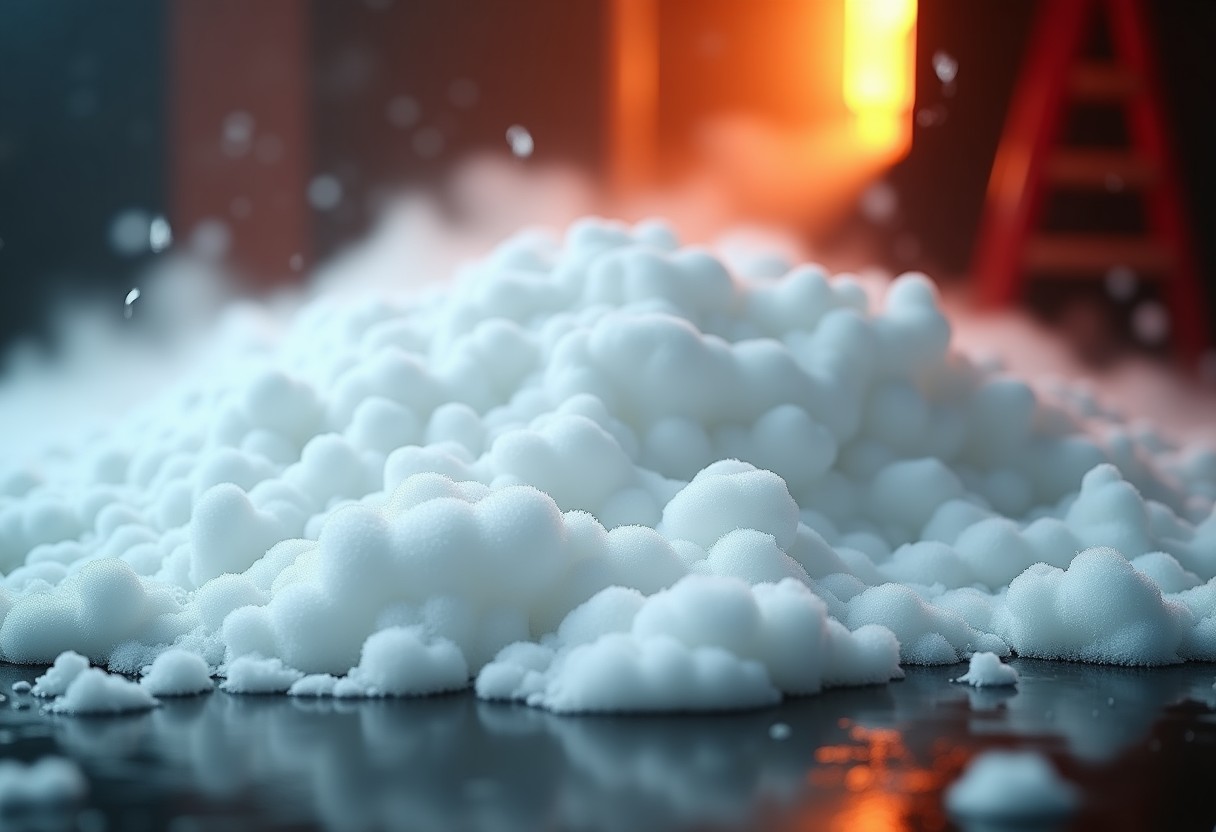
Foam covers the surface of the burning liquid like a film. This blanket cuts off the liquid's contact with oxygen and prevents it from evaporating; so it both extinguishes the flame and makes re-ignition harder. It achieves, by blanketing the surface, what water alone cannot.
Which fires? (Class B)
Foam is especially suited to Class B (flammable liquid) fires:
- Fuel (petrol, diesel) areas and stations
- Paint shops and areas using solvents/thinners
- Flammable-liquid stores and filling areas
In these areas, foam systems can be used together with ABC powder and CO₂ extinguishers, according to the risk.
Portable extinguisher or fixed system?
There are two approaches depending on the level of risk: foam extinguishers for small areas, and fixed foam suppression systems for high-risk and large areas. The right choice is made according to the size of the area and the type of risk.
Installation and maintenance
In foam systems, periodic checking of the foam concentrate is important as well as the equipment. In our fire foam service we plan, install and maintain a system suited to your area's risk.
If you have an area with fuel, paint or flammable-liquid risk, request an on-site survey to determine the right foam solution.