
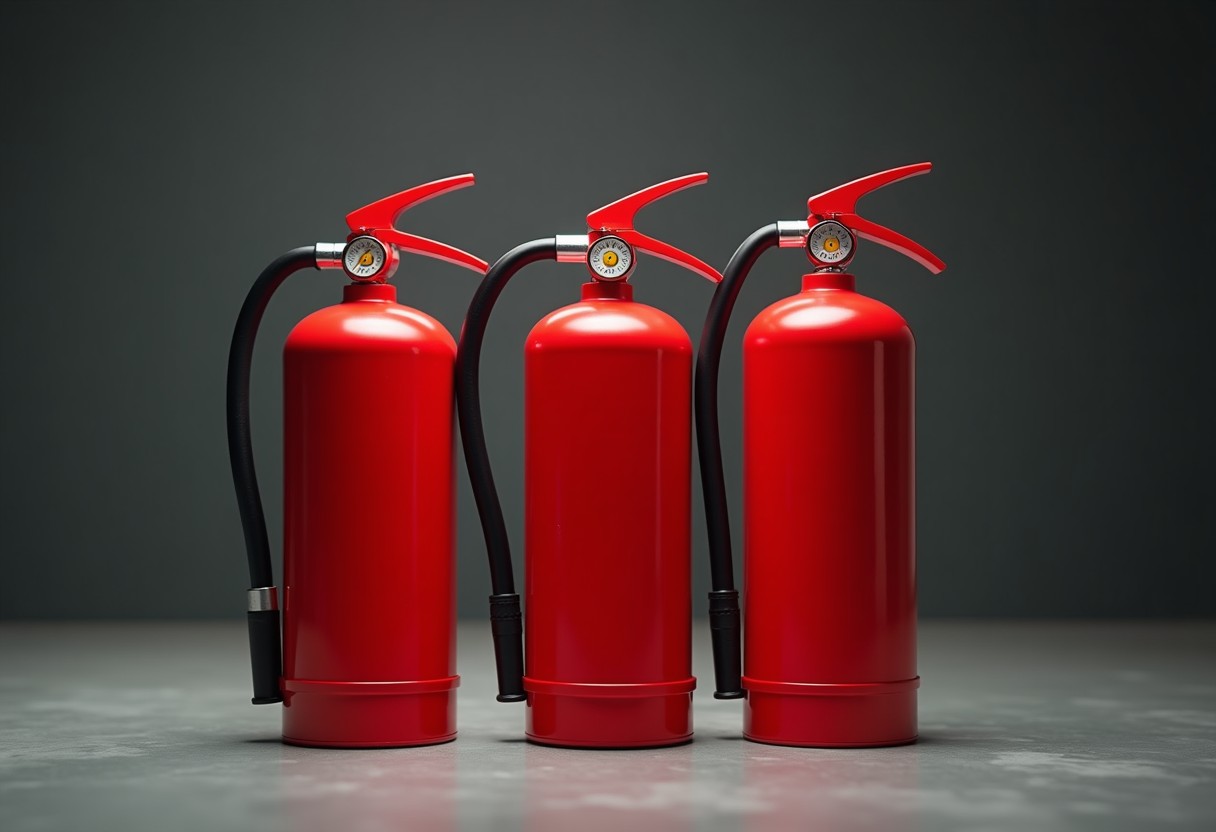
Which extinguisher for which risk? The logic of choosing the right unit.
Not all fire extinguishers are the same. The wrong agent may not only fail to put out some fires but can even make the danger worse. The difference between ABC powder, CO₂ and foam extinguishers is really about the type of fire. In this article we explain, with simple logic, which agent is used for which risk.
First, know the fire classes
The agent is chosen according to what is burning:
- Class A: Solid materials (wood, paper, fabric).
- Class B: Flammable liquids (fuel, paint, thinner).
- Class C: Flammable gases.
- E (electrical): For electrical fires the agent must leave no conductive residue.
ABC powder extinguisher: the general-purpose solution
Dry chemical powder (ABC) extinguishers can, as the name suggests, be used on Class A, B and C fires. Thanks to this broad coverage, it is the most widely preferred type in workplaces, homes, warehouses and general areas. The powder extinguishes by blanketing the flame. Its downside is that it leaves powder residue in the environment after use; so it may not be the first choice in areas with sensitive electronics.
CO₂ (carbon dioxide) extinguisher: for electricals and sensitive equipment
CO₂ extinguishers work by displacing oxygen and leave no conductive residue. They are therefore suitable for electrical panels, server rooms and areas with sensitive devices. They extinguish cleanly, leaving no powder behind. On the other hand, their effect can drop in open, windy environments and they may not be as effective as ABC powder on large solid-material fires.
Foam extinguisher: for flammable liquids
Foam extinguishers put out fire by covering the surface of a flammable liquid like a film, cutting off contact with oxygen and making re-ignition harder. They are the typical solution for areas with high Class B risk, such as fuel stations, paint shops and flammable-liquid stores. Fixed foam suppression systems can also be installed for such areas.
Which one for which area? Quick summary
- General workplace / home / warehouse: ABC powder
- Electrical panel / server room / sensitive device: CO₂
- Fuel, paint, flammable-liquid area: Foam
In most buildings these types are used together, distributed by risk. For example, keeping ABC powder in general areas and CO₂ in the electrical room is a common approach.
The right choice with an on-site survey
An on-site assessment is the best way to determine the extinguisher type and quantity suited to your area's risk. The wrong type means lost time during a fire. To discuss the right solution for your needs, contact us.